
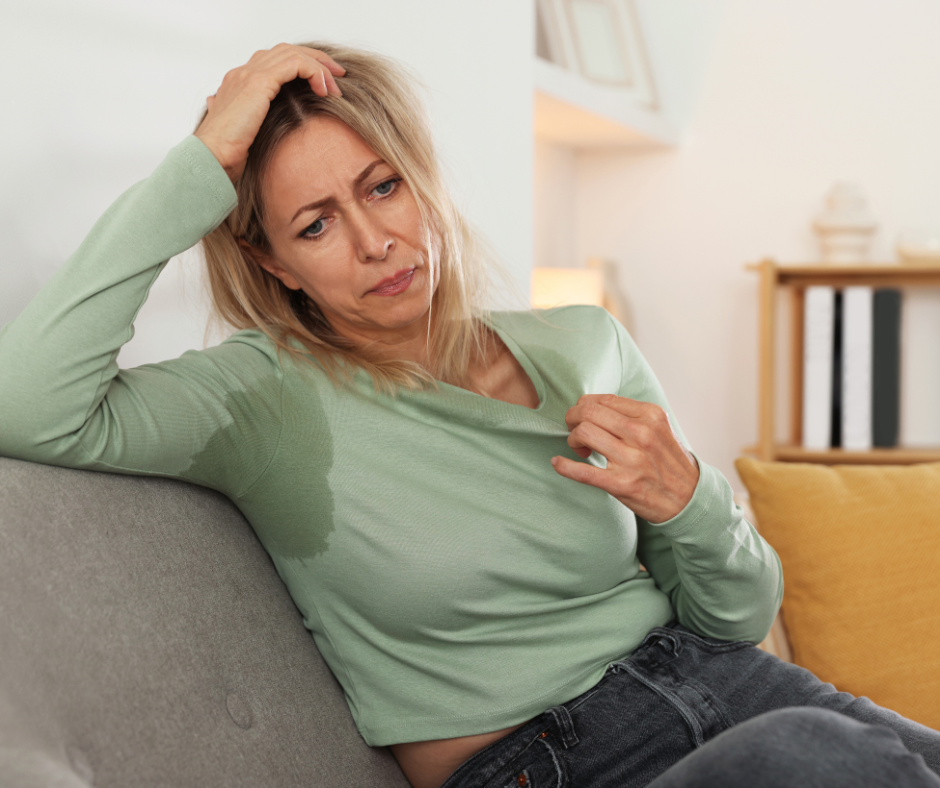
Is weight gain INEVITABLE during menopause?
No. And the belief that it does is likely having a bigger impact on your results and your daily actions than the hormones themselves.
What menopause does do is make fat loss harder.
It doesn't change what your body needs to lose fat. The principles of energy balance still apply (calories in versus calories out), and what builds muscle and drives fat loss before menopause is exactly the same during perimenopause and postmenopause.
What menopause actually changes is the environment in which you're trying to achieve those things. Fluctuating and eventually declining estrogen levels can contribute to poor sleep, increased hunger, low energy, changes in mood and impaired recovery. Add on those days when you just want the world to burn, it's easy to see why maintaining the habits that once came naturally can become considerably harder.
We're also often told by the latest ultra-relatable, low-credibility influencer that our metabolism slows as we age, particularly through menopause. While energy expenditure can change with age and body composition, menopause doesn't suddenly turn your metabolism down or mean you need to resign yourself to gaining weight.
Your daily movement can take a bigger hit than you realise
One of the biggest influences on your daily energy expenditure isn't your training session. It's everything you do outside of it.
This is called NEAT (Non-Exercise Activity Thermogenesis), which includes walking around, standing, taking the stairs, fidgeting, talking with your hands, doing the housework, moving around at work and all the other incidental movement that accumulates throughout the day.
When you're sleep is hit, you feel flat, you’re struggling with motivation or you simply don't have the energy you used to, your natural inclination is to do less, and this more than likely occurs without you noticing it. You might still make it to the gym three times a week, but the walking, incidental movement and general activity outside those sessions can drop considerably.
You sit more, move less and generally do less without necessarily realising it. And because NEAT can account for a substantial amount of your daily energy expenditure, even a relatively small reduction can make a difference.
To put that into perspective, imagine your daily incidental movement accounts for 500 calories of energy expenditure. If low energy and fatigue result in a 20% reduction, that's 100 fewer calories a day, or 700 calories a week. Over a month, that's approximately 3,000 fewer calories expended, without changing a single thing about your planned training.
The actual reduction will vary considerably between individuals, but the point is that small changes in daily movement accumulate, and they can be enough to gradually shift your energy balance in the wrong direction.
This is also where you need to be smarter with your approach. If your energy is low, the answer isn't necessarily to drag yourself through gym sessions. Sometimes a small, considered adjustment to your calorie intake is more appropriate than trying to burn more energy when you're already struggling to find it.
Fat loss still requires an energy deficit, how you create that deficit can be diet or movement.
The health you bring into menopause matters
It's easy to blame menopause for weight gain, declining fitness and feeling less like yourself. But sometimes what's happening has as much to do with the years leading up to it as the hormonal changes themselves.
For many women, their 40s are a demanding time. Kids are older, their lives are getting busier, careers are important, responsibilities are increasing and stress is often high. Somewhere along the way, training, nutrition and looking after themselves slips down the priority list.
Years of this can have you entering menopause with more body fat, less muscle mass, poor aerobic fitness and a lower capacity to handle everyday life. Then add in hormonal changes, fatigue, joint pain and disrupted sleep, and it can feel like the world is out to get you.
So now when it comes to fat loss, your starting point is already low fitness, limited muscle mass and reduced daily activity, and now you have more to address than just your calorie intake. You're trying to improve your health, rebuild your capacity and lose body fat at a time when you have no energy and feel like dumpster fire.
It's worth looking at what has been happening in the years before it, too.
What's with all the new aches and pains?
Suddenly your shoulder won't move properly, your knees are sore, your hips feel stiff and you're wondering when your body became 20 years older overnight.
Joint and muscle pain are common complaints during the menopausal transition, and declining estrogen is thought to play a role through its effects on inflammation, connective tissue and musculoskeletal health. Conditions such as frozen shoulder are associated with this stage of life, although not every new ache or injury is caused by hormones. Age, previous injuries, training load and underlying joint conditions still matter.
The important thing is not to respond by stopping movement altogether. Equally, pushing through persistent pain and hoping it disappears isn't a particularly good strategy. You may need to modify exercises, adjust loading, maintain comfortable movement and gradually build strength and range of motion around the affected area.
If pain is persistent, worsening or restricting normal movement, get it assessed by a health professional rather than automatically putting it down to menopause. Understanding what's actually happening allows you to manage it properly and keep building physical capacity without repeatedly aggravating the problem.
When your mood takes a nosedive, don't abandon everything
I’ll be honest, there will be days when your mood is terrible, your patience is non-existent, everything feels like an effort and you genuinely don't feel like yourself.
Hormonal fluctuations can influence mood, and when you combine that with poor sleep, fatigue and the demands of everyday life, it's not surprising that some days feel considerably harder than others.
The important thing is recognising that how you feel today doesn't have to dictate everything you do today.
When your mood is low, it's easy to withdraw from the things that usually make you feel good. You skip training, stop working towards your goals, put off the project you've been making progress on and retreat into the couch. Sometimes you genuinely need to rest, and that's fine, but there's a difference between adapting your expectations and abandoning the things that give you purpose, routine and a sense of achievement.
If your usual training session feels overwhelming, shorten it or go for a walk. If you don't have the energy to tackle the entire project at work, spend 20 minutes ticking off smaller tasks. You don't need to operate at 100%, but maintaining some connection with the things that matter to you is important.
Recognise that you're having a difficult day, adjust accordingly and understand that the way you're feeling isn't necessarily how you'll feel tomorrow. Avoid getting caught in a cycle where low mood leads to inactivity, withdrawal and abandoning the very things that help you feel capable and in control.
You don't need to fight your way through every symptom, but you also don't need to let every difficult day take you further away from the things that support your health and wellbeing.
Accept and Adapt.
Some menopause myths I don’t want you to fall for:
Don’t do HIIT, it’ll spike your cortisol. 🤦🏽♀️ All exercise raises cortisol, that’s meant to happen. People making this claim have no grasp of exercise physiology and should not be giving out health recommendations.
Cortisol is stopping you lose fat. Cortisol isn’t the enemy. Acute rises are a normal, necessary part of life and exercise. Chronically elevated stress levels need managing though as this will contribute to mood, energy, cravings and adherence to your diet.
You’re insulin resistant now, so you can’t handle carbs.’Insulin resistance isn’t an on/off switch. You haven’t suddenly lost the ability to process carbohydrate because you’re peri-menopausal. If insulin sensitivity has dropped, the fix is the same as it’s always been. Drop some weight, avoid long stretches of inactivity, and resistance train. Muscle is the single biggest site for glucose disposal in your body.
Avoid phytoestrogens. Foods high in phytoestrogens are actively good for peri and post-menopausal women.
What should menopausal women be doing
Firstly, whatever the fuck they want. I don’t put women in a box based on their menstrual cycle or menopause status. It’s ridiculous. I’ve had some of my best sessions at times of the month when it shouldn’t feel good, and some of the fittest and most impressive women I work with are in their 50s and are in the best shape of their lives. Try telling them that weight gain and inactivity is inevitable after menopause.
Resistance training. Non-negotiable for maintaining muscle and metabolic health, and it also protects bone density (a genuine concern at this life stage).
Protein. Roughly 1.6 - 2.2g per kg of bodyweight a day, to preserve muscle, support satiety and body composition. Or on a more practical level, aim for 30-40g or more at each meal and have a high-protein snack, you won’t be far off. You might think this is a lot and struggle to hit these targets, but you can’t fight physiology here.
Sleep. Most ladies who sleep badly because of menopause aren’t choosing to. So do whatever you can to help improve it, eg. manage stress levels, don’t watch horror movies before bed or doom scroll for hours, make sure you’re getting enough daily activity in and try to stick to a regular sleep schedule. Poor sleep drives the hunger increase most women notice at this stage plus lowers energy and mood. Improving poor sleep makes everything 10 x easier. But don’t worry if you can’t, there is still a lot we can do.
HRT, if appropriate for you. A conversation for you and your GP or menopause specialist, not something to self-manage from a blog post or social media.
Accept and Adapt. Some days you might be hit with fatigue that is all consuming, and beyond chewing on a power line, nothing is going to kick-start you into life. It’s on days like this that it’s fine to skip the gym session and just get out for a long walk. You don’t want to make it worse, and you certainly don’t want to hurt yourself doing something half-assed.
Some days you might have cravings similar to those of your 16-year-old self and want to down a whole block of chocolate. And sometimes this happens. This is why I suggest controlling what you can control. If you manage your diet as best as you can each week, when this does happen for 1-2 days a month, it’s not a massive factor in your body composition.
Supplements worth your money (and the ones that aren’t)
Most supplements marketed specifically at menopausal women are utter BS… or have very little evidence behind them.
What’s actually worth spending on:
Creatine monohydrate, 5g daily. Well established for supporting muscle mass and strength. Some less robust research on cognition and brain fog.
Protein powder, if needed. Not magic, just a convenient way to hit your protein target if food alone doesn’t get you there.
Vitamin D, if you’re deficient or get little sun exposure. Many women are low, especially over winter. Important for bone, immune and muscle function.
Omega-3, if your oily fish intake is low. May offer small benefits for mood and inflammation.
What you want to skip because you’re very likely wasting your money:
Collagen. Simply get in enough protein and your body will synthesise its own collagen just fine. My only slight caveat is a potential small benefit if you have osteoarthritis.
Menopause blends. Huge markup, wild claims, and almost always underdosed and full of things you don’t want or need so they can charge you more.
Anything built around adrenal support or cortisol balancing
Hormone balancing supplements
Fat burners
Detox products
Any other product marketed specifically for menopause
The bottom line
Menopause doesn’t change how fat loss works.
What it does do is make creating a deficit harder with worse sleep, increased hunger, lower mood and motivation, and impaired recovery. The fix isn’t a menopause plan or menopause supplement stack. It’s the same evidence-based fundamentals, applied while considering your symptoms and, if you’re working with me, by getting your energy up first so you’re not trying to add more to your plate when you’re already running on empty.
I hope this is useful and gives you some hope because you should be hopeful! Despise what many people and society as a whole tells you, life can get better as you age!
If you need help negotiating some of your health & fitness during this stage, start a conversation - link