
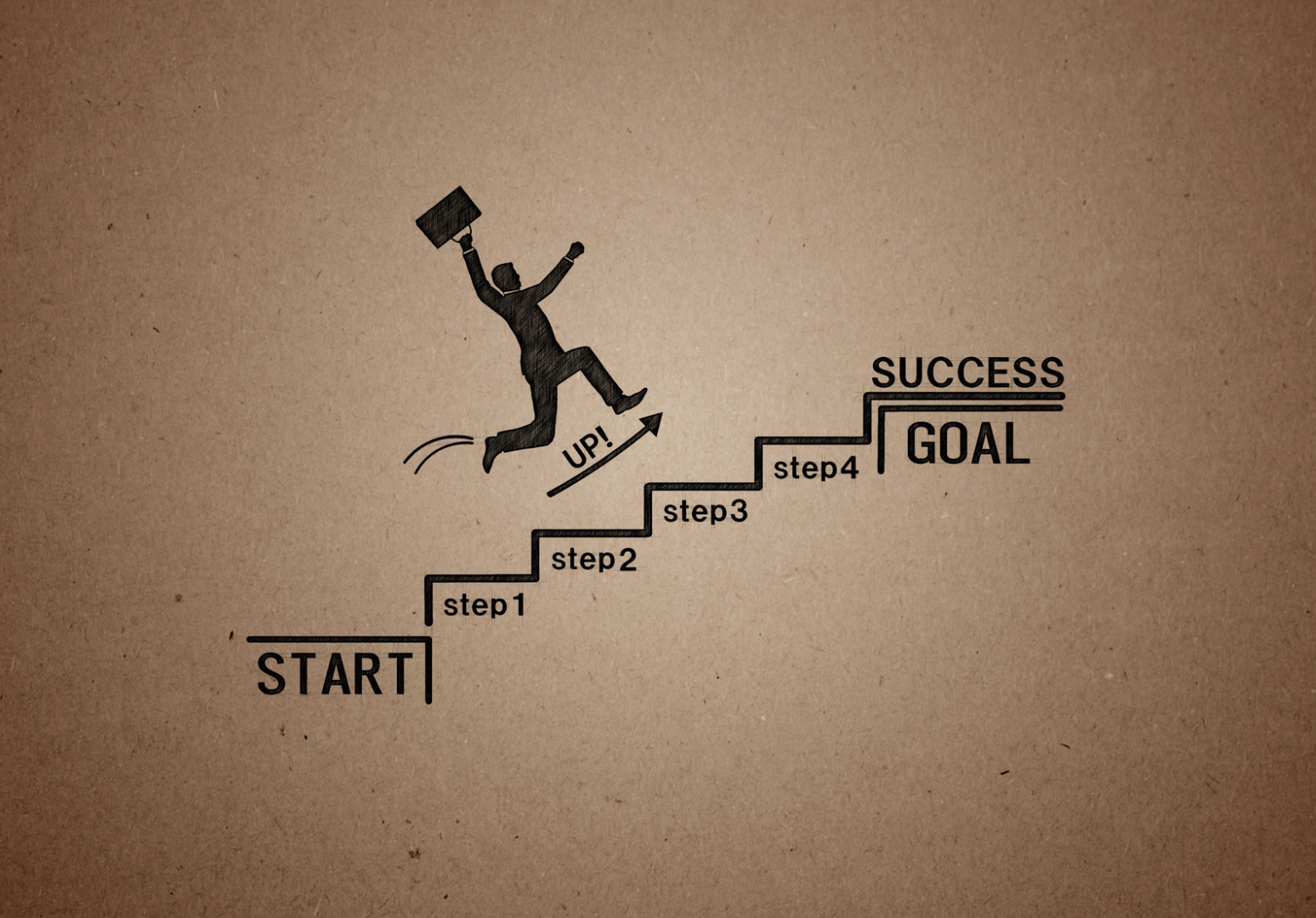
One of the biggest challenges with making progress towards a goal is maintaining consistency when life doesn't go to plan. It's easy to stick to your targets when you're motivated, well-rested, have plenty of time and everything is working in your favour. It's a different story when you're exhausted, stressed, busy or simply not feeling it.
This is where setting personal standards becomes important. Rather than relying on motivation or making decisions on the fly, decide in advance what you expect of yourself. Not just on your best days, but also on your worst.
The idea is to establish two levels of expectation - what you're aiming for when conditions are good, and the minimum standard you're prepared to live with when they're not. This gives you a clear course of action, removes the need to constantly negotiate with yourself and means you always have a way to keep moving forward.
HOW RANGE TARGETS WORK
At one end is the Optimal Target. This is what you're aiming for on your good days, when you've slept well, your stress is manageable, and you have the time and energy to give it your best. This is where you'll make your fastest progress. Your optimal target should be challenging enough to push you, but realistic enough to be sustainable.
At the other end are your Non-Negotiable Personal Standards. This is the minimum target you commit to hitting on your hardest days, when you're exhausted, emotional, stressed, short on time or just feeling flat. You've already decided what this looks like, so you don't need to waste energy debating whether you're going to do something. You know what the minimum expectation is, and you get on with it.
By hitting your non-negotiable standard, you're still moving forward, just at a slower rate. It's not about lowering your expectations or making excuses. It's about recognising that your ability will vary from day to day, while your commitment to progress remains.
It's also important to recognise that your non-negotiable isn't your new default. It's there to accommodate the difficult days, not replace the effort you put in when you have the capacity to do more.
Over time, consistently following through on these commitments builds self-trust and becomes part of your identity: "I'm someone who shows up for myself."
How this might look
CALORIES
Let's say your maintenance calories are around 2,000 calories. To lose fat, your Optimal Target might be 1,600 calories, creating a solid deficit that supports good progress.
But some days things won't go to plan. You might have a meal prepared for you, a work lunch, an unexpected dinner out or a day when your emotions get the better of you.
Instead of writing the whole day off because you've gone over 1,600 calories, you fall back on your non-negotiable standard. This might be somewhere between 1,800 and 1,950 calories.
You've eaten more than planned, but you haven't ruined anything. You're still likely in a calorie deficit, just a smaller one. You're still on track and still making progress, it's now a question of how quickly you're progressing, not whether you're progressing at all.
The important part is that you've already established this range. You don't need to decide whether to give up, start again tomorrow or compensate for what you've eaten. You simply return to the standard you've set.
STEPS
The same principle applies to daily movement.
Your Optimal Target might be 12,000 steps, with a Non-Negotiable Standard of 8,000.
On days when work is busy or you have a ton of commitments, you might need to be a little more intentional about getting your movement in. Take a short walk at lunch, pace while you're on the phone, park further away from the office or go for a 10-minute walk after dinner.
If you hit your non-negotiable, you can go to bed knowing you've upheld your standard and kept moving forward.
Note: The reason for these particular numbers is that a substantial proportion of the health benefits associated with daily steps are achieved around the first 8,000 mark (although benefits continue beyond this). For someone looking to lose fat, 12,000 steps can provide a useful opportunity to increase daily energy expenditure, but not so high that it starts to ramp up hunger and make it harder to stick to your deficit.
The science behind it
Research supports flexible approaches to eating and exercise for long-term behaviour change. Rigid, all-or-nothing thinking can make consistency harder, particularly when one missed target leads to abandoning the whole day.
A flexible approach allows you to adjust your actions to your circumstances without losing sight of your goal. If 12,000 steps feels impossible on a particularly difficult day, having an established minimum of 8,000 gives you something achievable to work towards. No negotiating, just get it done.
This also builds self-efficacy, meaning your belief in your ability to follow through on the actions needed to achieve your goals. Every time you uphold a commitment, you reinforce that belief.
THE BIGGER PICTURE
The goal isn't to hit your optimal target every single day. It's to build a level of consistency that keeps you moving in the right direction, regardless of what life throws at you.
Setting your standards in advance removes the need to constantly negotiate with yourself. You know what's expected of you and what to aim for when circumstances aren't ideal.
The flexibility of this approach also means you don't have to be at the same end of the range for every target. You might be at your non-negotiable calorie target but still hit your optimal step count, or vice versa. Progress isn't about getting everything perfect every day, it's about how all these behaviours come together over time.
Your Optimal Targets give you something to strive for. Your Non-Negotiable Standards ensure you keep moving towards them when things get difficult.
Over time, this builds more than progress towards a physical goal. It builds self-trust, confidence in your ability to follow through and an identity around being someone who does what they say they're going to do.
Have you thought about setting standards to hold yourself to when life gets busy, motivation drops, or things don’t go to plan? If you’re not sure where to start, let’s have a conversation about what realistic, meaningful standards could look like for you - link